Temple Warning Inscription
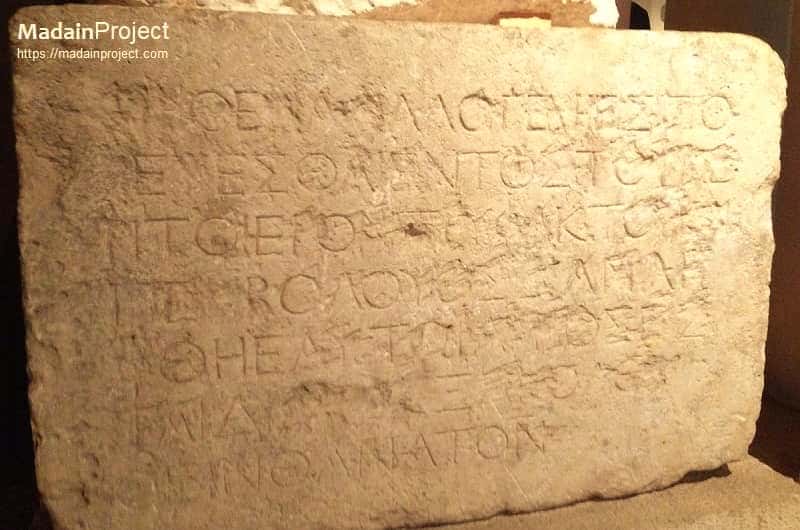
Original Greek-Latin inscription; now preserved in the Istanbul Archaeology Museum.
Among the few surviving objects that can be connected directly with the Jerusalem Temple before its destruction in 70 CE, one of the most remarkable is a simple limestone warning written in Greek. The inscription was discovered in Jerusalem in 1871 by the French archaeologist Charles Clermont-Ganneau, having been reused in a later building. Its message was blunt: “No foreigner shall enter within the balustrade and the enclosure around the sanctuary. Whoever is caught will have himself to blame for his subsequent death”. The Greek word allogenes, “of another nation”, identifies the person being warned, while the peribolos and dryphaktos refer to the enclosure and balustrade surrounding the sacred precinct.
This was not a decorative inscription or a later literary recollection. It was a public notice intended to regulate movement through the Temple complex. It is believed to have been installed in the Soreg; the low barrier that surrounded the inner precincts of the Jewish Temple.
What makes the stone especially important is that Josephus describes the same warning system. In The Jewish War (5.193–194), he writes that the second enclosure of the Temple was surrounded by a stone balustrade and that, at intervals, stood inscriptions warning foreigners not to enter the sanctuary. The notices were written in Greek and Latin, languages that could be understood by visitors from the wider Roman world. The surviving Greek stone therefore provides unusually strong archaeological confirmation of Josephus's description.
It also shows something important about the Temple itself: the outer precinct was not simply a Jewish-only space. Non-Jews could enter the outer area, while a clearly marked boundary restricted them from proceeding into the more sacred courts. The warning was consequently not a general prohibition against Gentile presence on the Temple Mount, but a precise restriction on crossing into the inner sanctuary.
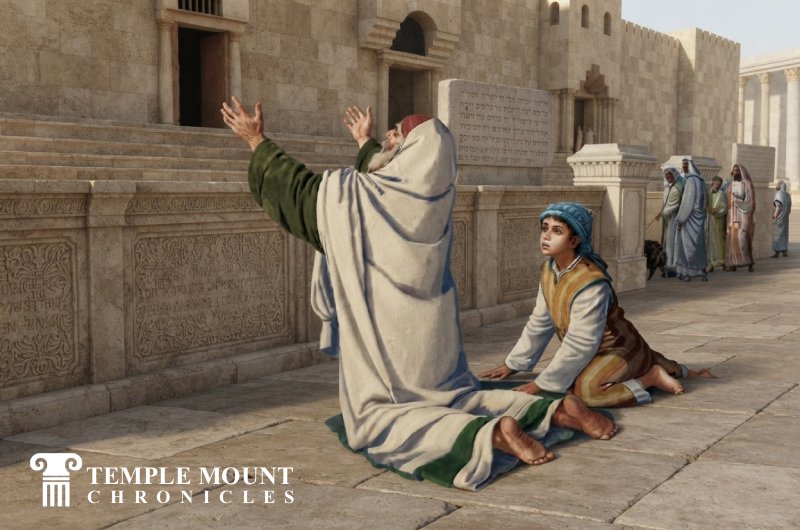
Artistic illustration of the Soreg; where the warning was once installed.
A second, fragmentary copy of the inscription was discovered in Jerusalem in the twentieth century and is now preserved in the Israel Museum, while the complete example is held in the Istanbul Archaeology Museums. Together they belong to a very small body of material evidence from Herod's Temple. Their significance is greater than their modest appearance suggests. The Temple was a place in which holiness was expressed through controlled access, and the warning inscription turned that principle into something physically visible and unmistakable: a person approaching the sacred enclosure could read, in the international language of the eastern Mediterranean, exactly where he was forbidden to go.