Ark of the Covenant
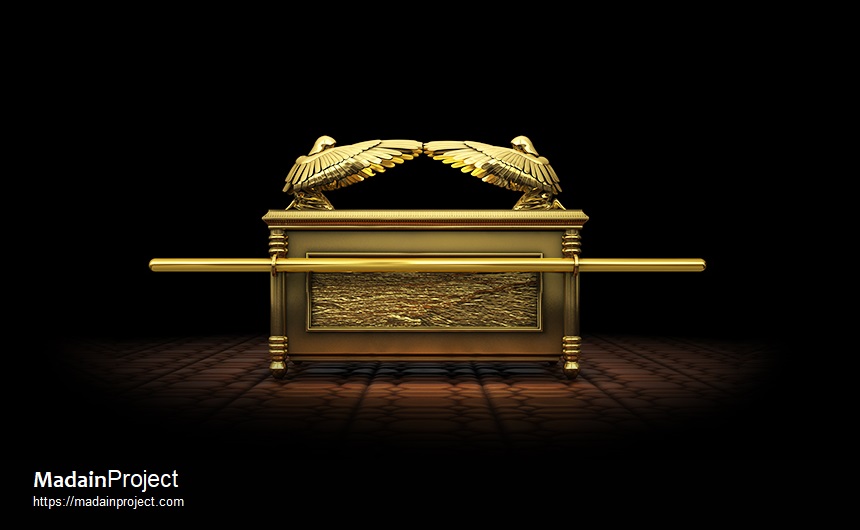
Ark of the Covenant (illustration). Courtesy of the Madain Project .
The Ark of the Covenant, also known as the Ark of the Testimony, is a sacred chest described in the Hebrew Bible. It supposedly contained the two stone tablets of the Ten Commandments inscribed by God, along with a golden pot of manna and Aaron's rod that budded. The Ark is central to Jewish and Christian theology and remains a subject of intense historical and archaeological interest.
According to the Book of Exodus, the Ark was constructed by Bezalel, a master craftsman, under the direction of Moses. It was crafted from acacia wood and overlaid with pure gold both inside and out. The dimensions were given as two and a half cubits in length, one and a half cubits in width, and one and a half cubits in height—roughly equivalent to 4 feet by 2.5 feet by 2.5 feet in modern measurements.
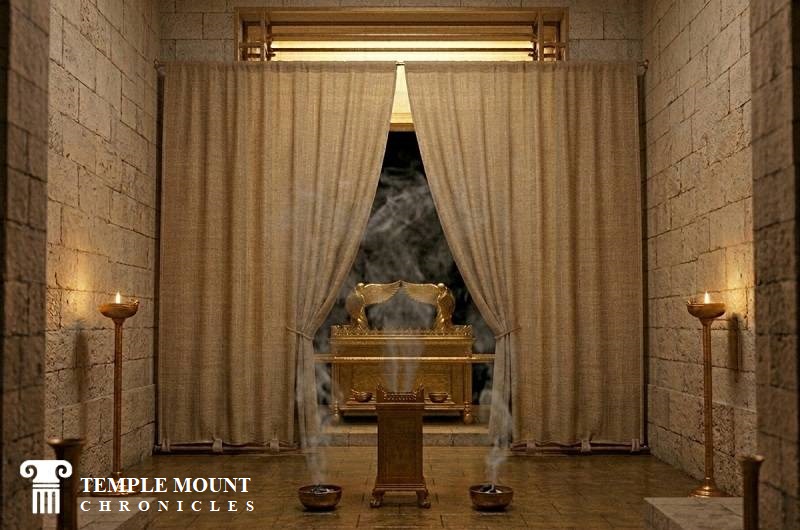
Conceptual visualization of the Holy of Holies, with the Arch of the Covenant.
The Ark was housed first in the Tabernacle during the wilderness wanderings of the Israelites, then later in the First Temple built by Solomon in Jerusalem around 960 BCE. The Temple's inner sanctum, or Holy of Holies, was specifically designed to contain the Ark. Only the High Priest was permitted to enter this chamber, and only once a year on the Day of Atonement.
The fate of the Ark following the Babylonian destruction of the First Temple in 586 BCE remains one of history's greatest mysteries. Some traditions suggest it was hidden by the Prophet Jeremiah, while others propose various locations including Ethiopia, where the Coptic Church claims to possess it. No archaeological evidence of the Ark's existence has been discovered, making its actual fate unknown.