Second Temple: Transformation Through the Ages
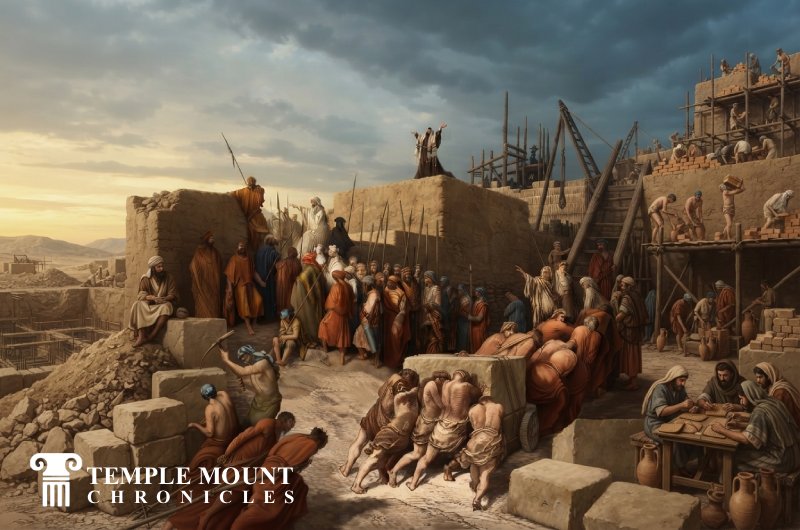
The rebuilding of the second temple begins.
Was the Second Temple a single building standing over centuries or was it ever rebuilt, altered or expanded. The expression “Second Temple” can create a misleading picture in the modern mind. It sounds like the name of one particular building, standing in Jerusalem from the return from Babylon until its destruction by the Romans in 70 CE. Jewish tradition, however, understood the Mikdash (Temple) as a continuing sacred institution, while its physical form changed substantially over the centuries. The Temple associated with Zerubbabel was not identical in appearance to the magnificent sanctuary known from the final decades of the Second Temple period, and the Temple Mount itself underwent even greater transformation. The history of the Second Temple is therefore not simply the history of one building. It is the history of a sanctuary, its courts and sacred precinct, repeatedly altered as Jerusalem itself changed.
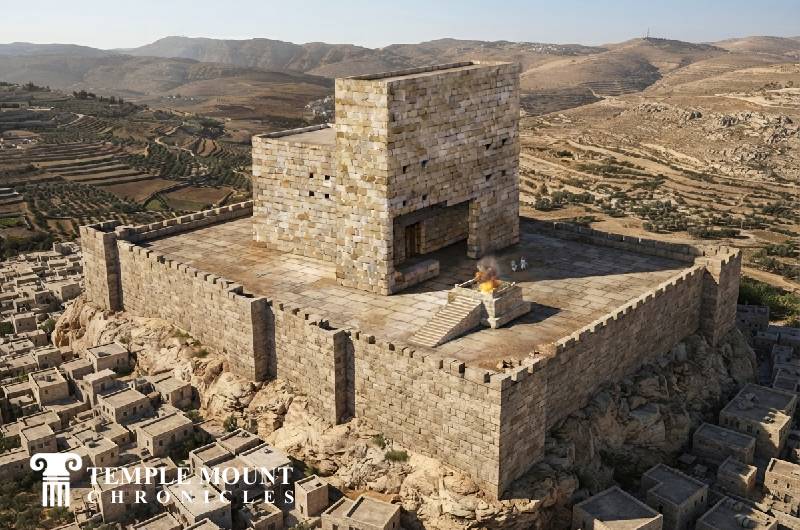
The temple built by Zerubbabel, circa 538–516 BCE.
The beginning of the Second Temple belongs to the Persian period. After the Babylonian exile, the returning Judeans rebuilt the House of God in Jerusalem under the leadership of Zerubbabel and Joshua the High Priest. The biblical account in Ezra describes the work as the rebuilding of the Beit Elohim, the House of God, and records that the elders “built and prospered through the prophecy of Haggai the prophet and Zechariah”. The work was completed during the reign of Darius. This was the Second Temple in its earliest form: a restored sanctuary on the ancient Temple site, continuing the sacrificial worship of Israel. It should not, however, be confused with the later Herodian monument familiar from Josephus and archaeology. Centuries separated the two.
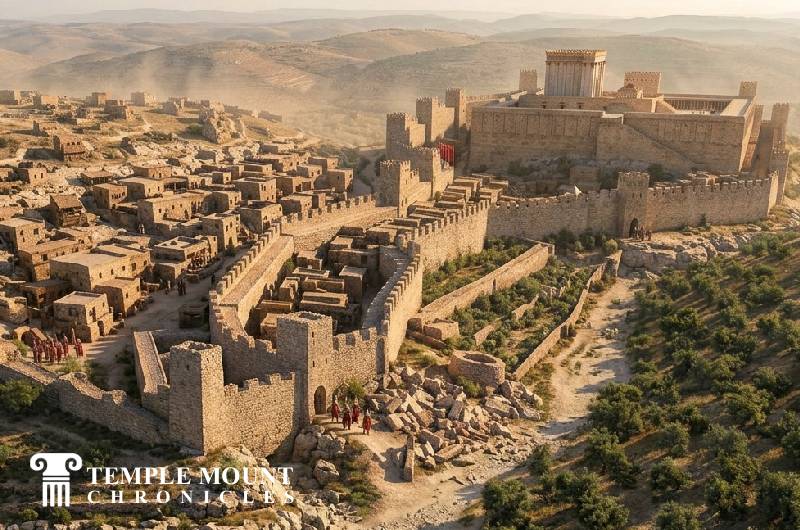
Jerusalem during the time of Nehemiah, circa 450 BCE.
The Temple did not stand as an untouched Persian-period building. Jerusalem passed through successive political worlds—Persian, Hellenistic, Hasmonean and finally Roman—and the sacred precinct was correspondingly altered. By the late Second Temple period, what Jews called the Mikdash included far more than the innermost sanctuary. The Mishnah's tractate Middot, although compiled after the destruction of the Temple, preserves a detailed rabbinic description of the Temple complex: gates, courts, chambers, steps, priestly facilities and the Heikhal, the sanctuary itself.
It describes the Temple Mount as a defined enclosure and then leads the reader inward through successive sacred spaces. The distinction is important. The Heikhal was a building; the Temple precinct was an architectural world surrounding it.
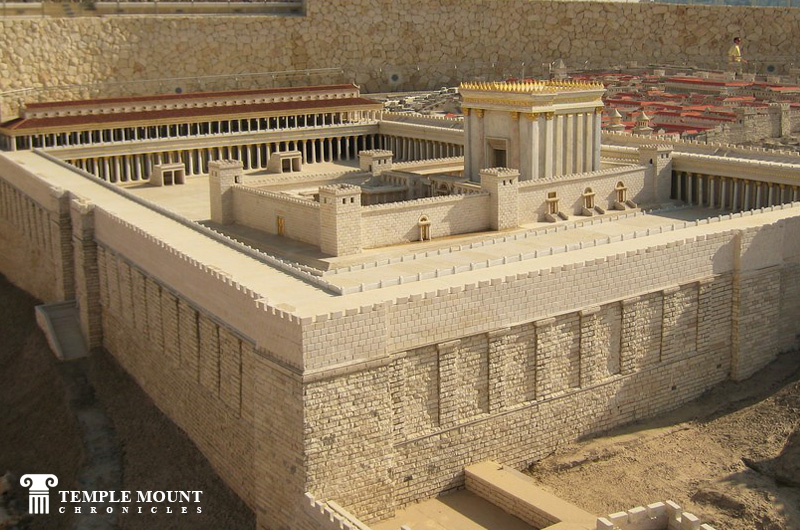
The Herodian Temple Mount.
The most dramatic transformation came under Herod the Great. Around 20/19 BCE, in the eighteenth year of his reign, Herod undertook what Josephus describes as an immense rebuilding of the Temple. His own presentation of the project, preserved by Josephus, emphasized the inadequacy of the earlier sanctuary and his intention to make it larger and more magnificent. Herod promised that the old Temple would not be demolished until materials had been prepared for its replacement. The sanctuary itself was constructed by priests, while Herod concentrated heavily on the surrounding courts and monumental structures. Josephus states that the sanctuary took a year and six months to build, whereas the outer enclosures and colonnades continued for eight years.
This distinction between sanctuary and precinct becomes especially striking when Josephus describes the finished complex. He speaks of the Temple itself standing within successive courts and enclosed spaces. There was an outer court surrounded by imposing colonnades; beyond it lay a more restricted enclosure marked by an inscription warning non-Jews and pagans against entering; farther inward was the court reserved for priests, with the altar before the sanctuary. The Heikhal itself stood still farther within. In other words, “the Temple” could refer to the sacred institution as a whole, while its architecture consisted of a hierarchy of spaces, buildings, walls, gates and courts. Herod's great temple or achievement was therefore not simply the erection of a larger house. He transformed the entire setting in which the Temple functioned.
The rabbinic sources preserve the same architectural complexity from a different perspective. Middot describes the Temple Mount, the soreg or surrounding fence, the cheil, the women's court, the Israelite court, the priestly court, the altar, the chambers and the gates leading toward the sanctuary. Seven gates are described in the inner court, including the Nicanor Gate, beside which stood chambers associated with the priestly service. Other sources describe the Chamber of the Hearth, the Chamber of the Spark, the Chamber of Avtinas and numerous other facilities where priests lived, prepared offerings, guarded the sacred precinct and carried out the daily service. These were not decorative additions to a single monumental building. They were part of the functioning Mikdash, a sacred complex whose architecture corresponded to the divisions and gradations of holiness prescribed by Jewish law.
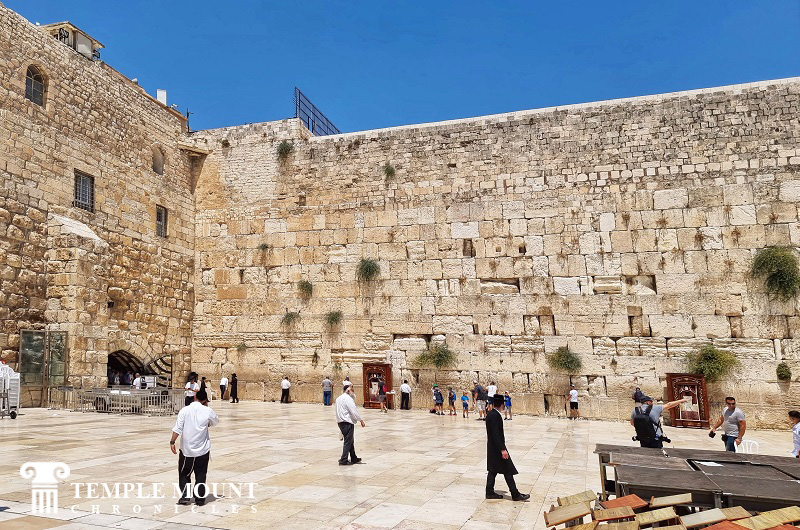
The Wailing Wall /a section of a much larger western wall of the Temple Mount.
Archaeology makes the scale of this transformation difficult to ignore. The surviving Herodian retaining walls, monumental stones, gates and underground spaces belong principally to the enormous platform created and reshaped around the Temple. Features such as the southern entrances associated with the Huldah Gates and the monumental approach represented by Robinson's Arch belong to this wider architectural setting, while the sanctuary itself has disappeared. That absence can distort our imagination: the most visually substantial remains today are largely the walls and approaches of the Temple Mount, not the Temple building that once stood at its center. The result is a historical paradox. The “Second Temple” was remembered as a single sacred institution, but the physical Jerusalem in which that institution existed was repeatedly rebuilt, enlarged and reorganized. By the first century CE, the Temple was the heart of an immense architectural complex, and the sanctuary at its center was only one—though unquestionably the holiest—part of that greater sacred landscape.