Well of Souls — What We Actually Know
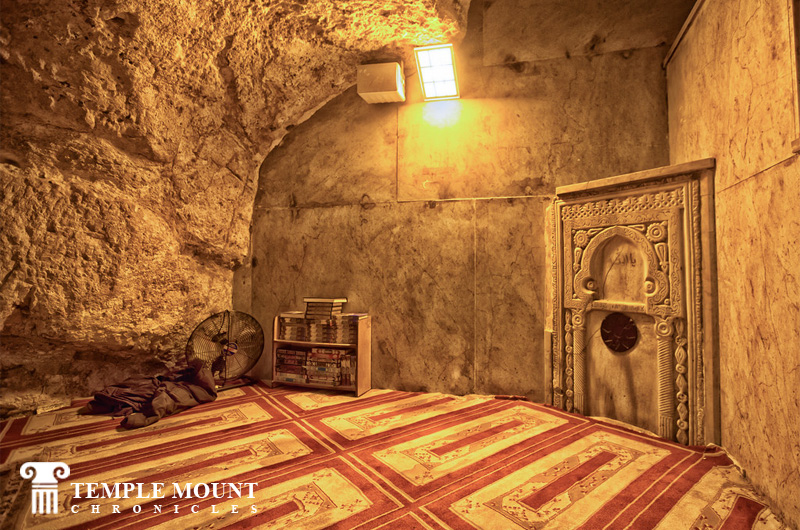
Well of Souls, beneath the Foundation stone.
Beneath the Dome of the Rock in Jerusalem, directly below the exposed rock at the center of the shrine, lies a subterranean chamber traditionally known as the Well of Souls, or Bi'r al-Arwah in Arabic. The chamber lies immediately beneath the Sakhrah (Foundation Stone), the sacred rock that forms the focal point of the Dome, and is reached today by a short flight of steps on its southeastern side. It is a relatively small chamber, generally described as roughly six metres across, although its irregular limestone surfaces make precise measurements difficult. Much of the interior consists of exposed bedrock. The chamber also contains several mihrab (prayer niches), reflecting its long history as a place of Muslim prayer. Its present appearance, however, is the result of successive alterations rather than the survival of an untouched ancient chamber.
At the centre of the ceiling is a small circular shaft passing upward through the Sakhrah. It is approximately 46 centimetres in diameter and extends about 1.7 metres through the rock before opening onto the surface above. Its purpose is unknown. One proposal has identified it as the remains of an ancient shaft or tomb; another has suggested a later opening associated with light or ventilation. A further tradition connects it with the drainage of sacrificial blood from the Temple, but there is no archaeological evidence establishing such a function. The shaft also does not make the chamber a “well” in any straightforward archaeological sense. There is no established evidence of a water source or of a mechanism by which the chamber operated as a well or cistern. The name belongs to the history of the site's interpretation; the physical feature itself remains unexplained.
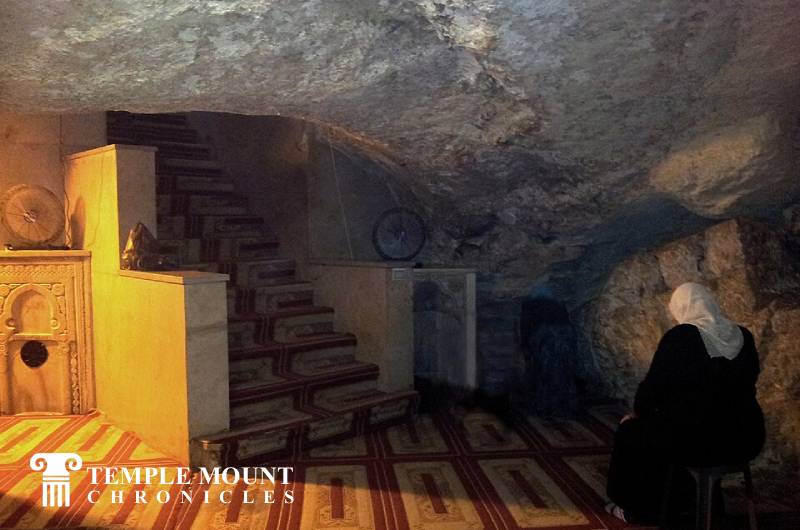
Present day staircase leading down to the Well of Souls cavity.
The route into the chamber has its own history. The present staircase descends through a passage cut beside the southern edge of the Foundation Stone (Even ha-Shetiyah), and substantial alterations to the rock and its surroundings are generally associated with the medieval period. During the Crusader occupation of Jerusalem, the Dome of the Rock was converted into the Templum Domini, the “Temple of the Lord”, and the sacred rock was incorporated into a Christian understanding of the former Temple. The Crusaders are also associated with alterations to the rock and access to the chamber, although the precise dating of individual cuts and features remains a matter of interpretation. The important point is that the entrance visible today should not automatically be projected back into the First or Second Temple periods. The rock itself belongs to the ancient limestone bedrock of Jerusalem; the configuration through which people enter the chamber today has a much more complicated history.
The written record takes us back at least to the medieval period. Islamic writers describe the sacred rock and the space associated with it, and the Persian traveler Nasir-i Khusraw, who visited Jerusalem in 1047 CE, recorded the Dome of the Rock and traditions surrounding the Sakhrah. These accounts are important because they show that the rock was already surrounded by a developed sacred geography centuries before modern archaeological investigation. They do not, however, tell us when the subterranean cavity itself was formed or what its earliest function was. Modern interest in the chamber has produced its own history of speculation. In 1911 CE, the Parker expedition secretly entered the Dome of the Rock while searching for supposed Temple treasures and investigated beneath the sacred rock. Their activities became part of the extraordinary modern story surrounding the site, but they did not produce evidence establishing an ancient chamber, treasure, or Temple installation beneath the Sakhrah.
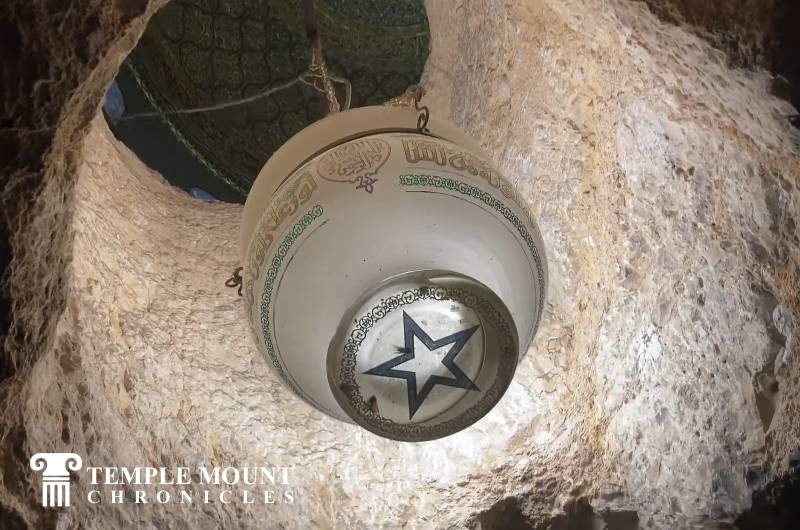
Modern chandelier in the central shaft.
The safest conclusions are consequently modest. A chamber exists beneath the Sakhrah, much of it formed within the natural limestone, and its interior and access have been altered over the centuries. It has been a place of prayer for a long period, and several of its features remain difficult to date or interpret. There is no secure archaeological evidence that identifies the chamber as a room of Solomon's Temple or Herod's Temple, nor is there evidence that a larger hidden complex lies beneath it. The original purpose of the cavity remains unknown. So too does the original purpose of the shaft through the rock. The name “Well of Souls” belongs to a later history of the site, when the Sakhrah and the space beneath it acquired increasingly elaborate religious meanings. Those traditions are important historical evidence in their own right, but they should not be mistaken for evidence of the chamber's original physical function. The Jewish traditions surrounding the Foundation Stone and the Creation tradition, the later accounts of souls beneath the rock, Islamic traditions concerning the Sakhrah and the Mi'raj, and the Crusader identification of the site with the Holy of Holies each belong to different periods and sources—and are best examined on their own terms.