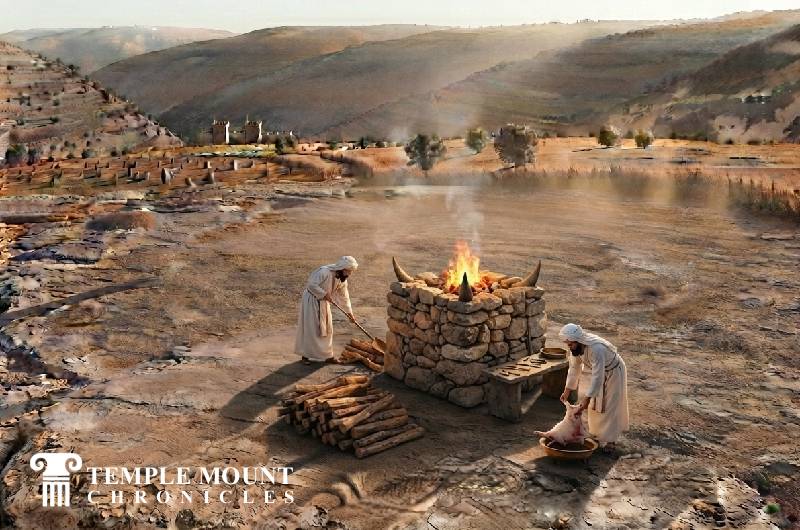
David’s Altar on Araunah’s Threshing Floor
Present day entrance to the Gihon Spring.
The altar began with a command. After the plague had struck Israel, the prophet Gad came to David and told him, “Go up, rear an altar unto the LORD in the threshingfloor of Araunah the Jebusite” (2 Samuel 24:18). David went to Araunah and asked to purchase the threshing floor so that he could build the altar “that the plague may be stayed from the people.” Araunah offered the king the site, the oxen for sacrifice, and the threshing instruments and yokes as wood. David refused to accept them as a gift: “neither will I offer burnt offerings unto the LORD my God of that which doth cost me nothing.” He therefore bought the threshing floor and the oxen for fifty shekels of silver, built an altar there, and offered burnt offerings and peace offerings. The LORD answered David, and the plague was stopped (2 Samuel 24:18–25).
The parallel account in 1 Chronicles gives the altar a further significance. There David buys the site from Ornan, the name used for Araunah in Chronicles, and pays six hundred shekels of gold for the site. After David builds the altar and offers his sacrifices, the text records an event absent from Samuel: “the LORD answered him with fire from heaven upon the altar of burnt offering” (1 Chronicles 21:26). The angel then puts away his sword. David continues to sacrifice at the threshing floor, while the Tabernacle and its altar remain at Gibeon. The distinction matters: David had not merely found a place to perform a sacrifice; at this particular site, God had answered the king's appeal by fire.
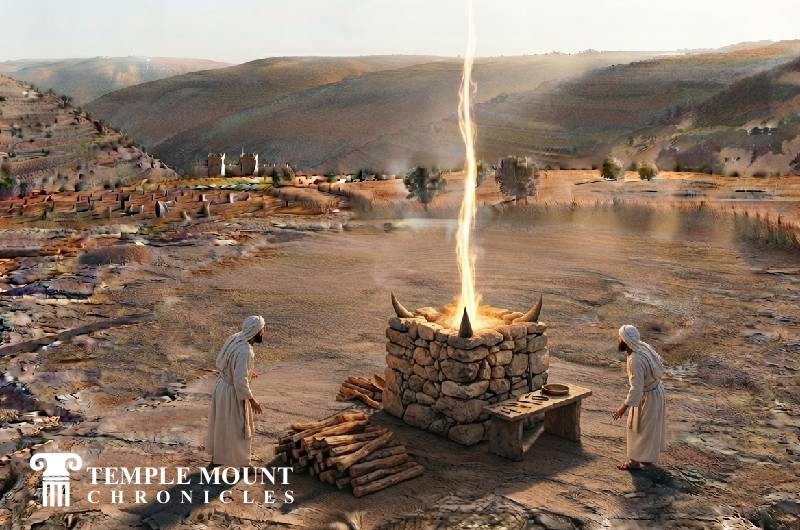
Then comes the statement that connects David’s altar with the Temple. Immediately after describing God's answer at Ornan's threshing floor, Chronicles records David saying: “Here shall be the house of the LORD God and here the altar of burnt offering for Israel” (1 Chronicles 22:1). The Temple itself would be built by Solomon, not David, and 2 Chronicles later identifies its location explicitly: Solomon “began to build the house of the LORD at Jerusalem in mount Moriah,” at “the place that David had prepared in the threshingfloor of Ornan the Jebusite” (2 Chronicles 3:1). The biblical sequence is therefore precise: David's altar stood on Ornan's threshing floor; God answered there by fire; David designated the place for the house of the LORD; and Solomon subsequently built the Temple there.