
Priestly Gold Bell: Second Temple Period
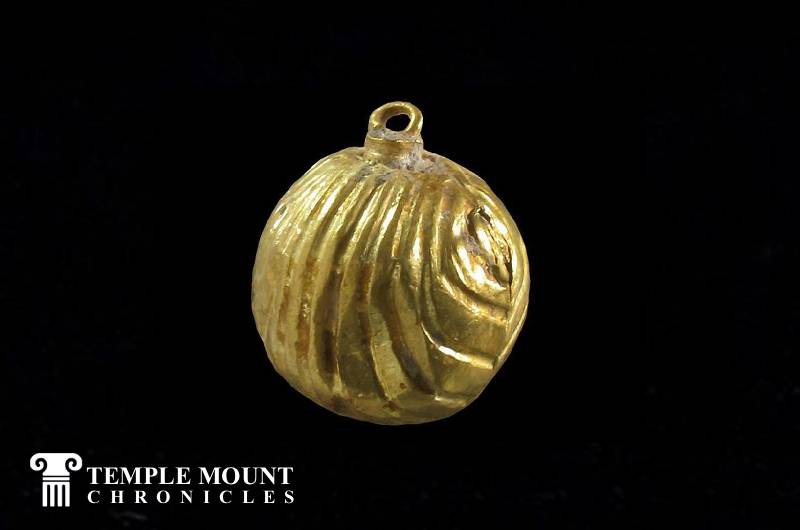
The Second Temple Period gold bell discovered during an excavation in the City of David National Park in Jerusalem.
A tiny bell of pure gold, discovered in Jerusalem, offers an unusually intimate glimpse into the religious world of the Second Temple period. Found in an ancient drainage channel running from the area of the City of David toward the Temple Mount, the bell is only about a centimeter across and has a small loop at its top, apparently designed for attachment to clothing. Excavators Eli Shukron and Ronny Reich identified it as a Second Temple-period object, probably dating to the first century CE.
Its form is especially intriguing because the Book of Exodus describes the garments of the Israelite high priest as having gold bells around the hem, alternating with pomegranate ornaments. The excavators suggested that this particular bell may have been sewn onto the garment of a high-ranking Jerusalem official. They also acknowledged, however, that it is impossible to establish with certainty whether its original wearer was one of the high priests.
The discovery became even more remarkable in 2026, when an X-ray examination revealed a tiny clapper hidden inside the bell. The object was therefore not merely decorative: it had been deliberately constructed to produce sound. This small piece of gold provides a tangible counterpart to the biblical description of priestly garments and offers a rare glimpse into the craftsmanship and material culture of Jewish religious life in Second Temple Jerusalem.
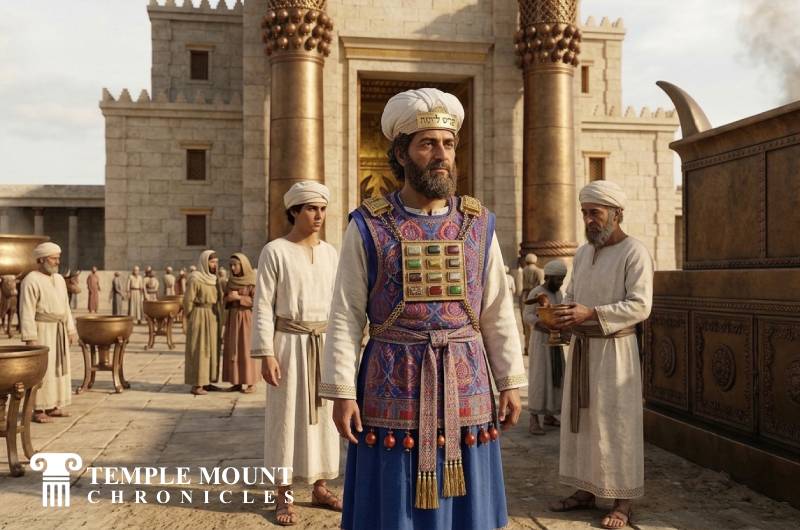
A stylised illustration of an Iron Age Judahite High Priest; during the Solomonic Era (First Temple period).
The bell cannot by itself prove that it belonged to the High Priest, but its Jerusalem context, Second Temple date, form, and striking correspondence with the biblical tradition make it an important piece of evidence for the Jewish character of the city and its religious culture. In a remarkably small object, the written traditions of Jewish worship meet the physical remains of the people who lived, worshipped, and walked the streets surrounding the Temple.