
Third Temple: Prophecy, Law, and the Halachic Future
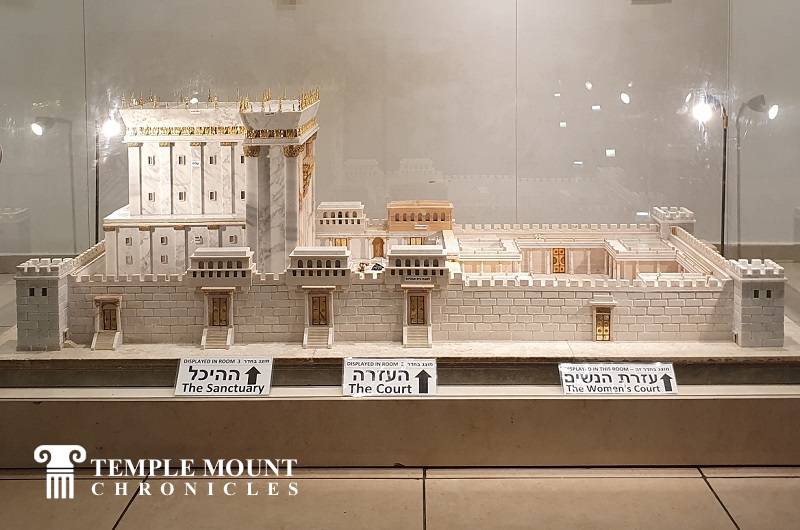
The Third Jewish Temple model in the Temple Institute, Jerusalem.
The concept of the Third Temple—known in Jewish liturgy and eschatology as the Beit HaMikdash HaShlishi—represents the ultimate spiritual and redemptive aspiration of traditional Judaism. Unlike the First and Second Temples, which were historically bound, physically destroyed monuments, the Third Temple is conceptualized as an eternal, immutable sanctuary that will permanently restore the Divine Presence (Shechinah) to the physical world. In orthodox Jewish theology, the reconstruction of this sanctuary is intrinsically linked to the Messianic Era (Yemot HaMashiach), the global ingathering of the Jewish exiles, and an era of universal peace. Far from being a mere historical curiosity, the daily longing for this structure permeates all aspects of traditional Jewish life, serving as the focal point of legal, liturgical, and philosophical discourse for millennia.
Liturgically, the anticipation of the Third Temple is woven directly into the fabric of daily Jewish prayer and annual fast days. Thrice daily, during the recitation of the central Amidah prayer, traditional Jews turn their physical stance toward the geographic coordinates of Mount Moriah in Jerusalem, petitioning for the restoration of the sacrificial service (Avodah) and the rebuilding of the city. This collective memory is most acutely expressed on Tisha B'Av (the Ninth of Av), a strict 25-hour day of national mourning and fasting that commemorates the physical destruction of both prior temples. By continually reliving these historical tragedies through ritualized mourning, Jewish tradition ensures that the architectural blueprint and spiritual urgency of the future sanctuary remain active components of the national consciousness rather than fading into historical obscurity.
Within the realm of Halakha (Jewish law), a profound classical debate exists regarding the precise methodology by which the Third Temple will manifest on Earth. The preeminent medieval philosopher Maimonides (Rambam), writing in his legal compendium Mishneh Torah, presents a rationalistic, human-centered approach. Maimonides rules that the physical construction of the Third Temple is a mandatory, binding commandment upon the Jewish nation, explicitly stating that it will be built by human hands under the direct leadership of the true messianic king. To prepare for this scenario, contemporary institutions like the Temple Institute (Mechon HaMikdash) in Jerusalem have spent decades meticulously fabricating ritually pure priestly garments, golden vessels, and the architectural blueprints required to execute Maimonides' legal mandates the moment political conditions permit.
Conversely, a highly prominent mystical school of thought, championed by the medieval commentator Rashi and expanded within Hasidic philosophy, argues for a supernatural manifestation. This perspective posits that the Third Temple already exists in a fully formed, celestial state within the heavenly spheres. Upon the arrival of the Messiah, this spiritual structure will miraculously descend from the heavens directly onto the bedrock of Mount Moriah, entirely bypassing the need for human construction or geopolitical intervention. For many contemporary Orthodox Jews, this supernatural model serves as a theological safeguard, allowing them to maintain an unwavering belief in the temple's imminent arrival while avoiding active, volatile involvement in the complex geopolitical landscape surrounding the modern Temple Mount platform.
Regardless of whether the structure manifests through human engineering or divine intervention, Jewish law dictates that its precise location is fixed and unalterable. According to biblical law derived from the Book of Genesis and the accounts of King David, the altar of the Third Temple must stand on the exact physical spot where Isaac was bound and where the prior altars of Solomon and Herod were erected. Because the sanctity of this specific acropolis is considered eternal and independent of any physical building, contemporary halachic consensus strictly prohibits any alteration to the site's layout. This absolute geographic anchoring creates a profound theological framework where the future sanctuary cannot be relocated to accommodate modern urban development or regional political dynamics; it remains locked to the ancient bedrock of Jerusalem.
The ultimate spiritual purpose of the Beit HaMikdash HaShlishi extends far beyond a national monument for the Jewish people, projecting a universal vision for all of humanity. Drawing directly from the classical prophecies of Isaiah and Ezekiel, traditional Judaism views the Third Temple as a cosmic conduit for divine energy that will elevate human consciousness. Scripture describes the future sanctuary as a "house of prayer for all nations," where foreign kings and global populations will travel to Jerusalem to seek spiritual wisdom and participate in universal worship. In this eschatological framework, the physical architecture of the temple serves as an earthly anchor for a transformed global reality, turning a contested, war-torn mountain into the definitive focal point of absolute international unity and divine peace.