The 49 Cisterns of the Temple Mount
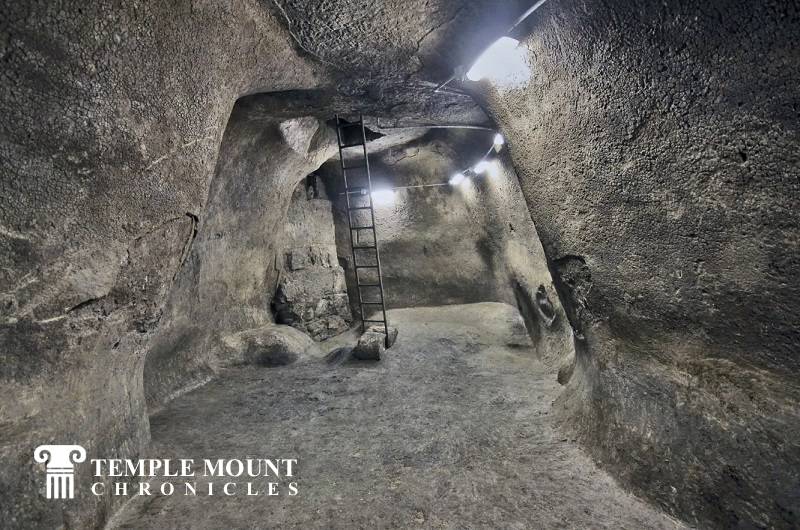
First Temple Period Public Water Reservoir, discovered by the Israel Antiquities Authority near Robinson's Arch at the foot of the Temple Mount in Jerusalem.
The subterranean landscape beneath the Temple Mount contains a vast, restricted network of forty-nine ancient water cisterns and forty-two feeding channels that hold critical physical evidence of Jerusalem’s ancient sanctuary eras. According to investigative documentation compiled by Israel Hayom, these underground voids represent a closed archaeological frontier, as systemic exploration within the perimeter has been strictly prohibited by the Jerusalem Islamic Waqf since the mid-twentieth century. Consequently, contemporary architectural historians must rely heavily on historical surveys, archival engineering diagrams, and peripheral salvage data to reconstruct the layout of this hidden infrastructure. This hidden network functions as a physical archive, preserving the structural evolution of Mount Moriah from a rugged, natural ridge into a highly engineered classical acropolis.
Historically, the functional evolution of these subterranean chambers predates the monumental Herod-era plazas, beginning as ancient stone quarries and shaft graves during the early Canaanite and Iron Age periods. As subsequent Judean kings expanded the city's cultic core, these jagged subterranean quarries were systematically hollowed out, lined with specialized hydraulic plaster, and converted into massive deep-water reservoirs. This sophisticated engineering was an absolute logistical necessity to sustain the temple complex, which required immense volumes of water to cleanse the sacrificial altars, fill the ritual immersion pools (mikvaot), and provide potable water for the hundreds of thousands of pilgrims who flooded the city during the annual festival cycles.
Among the forty-nine documented cavities, individual cisterns vary drastically in shape, volume, and original design, reflecting the diverse engineering methods of the empires that carved them. The largest cavern, traditionally designated as Cistern 8 or the "Great Sea," is a massive subterranean vault capable of holding millions of gallons of water, supported by structural rock pillars left intact by ancient stonemasons. Other voids, such as the cross-shaped Cistern 3, feature unique geometric layouts that modern researchers like Joseph Patrich have used to map the layout of the overlying Herodian courts. The structural styles of these chambers allow archaeologists to differentiate between early Hasmonean engineering, classical Herodian vaulted arches, and later Umayyad adaptations.
Beyond their daily utility as utility infrastructure, these subterranean chambers served a dark, strategic purpose as subterranean refuges during the catastrophic Roman siege of Jerusalem in 70 CE. As recorded by the first-century historian Flavius Josephus, when the legions of Titus breached the outer retaining walls and set fire to the sanctuary, thousands of Jewish defenders retreated into these damp underground channels and cisterns. The tunnels became a final, subterranean battleground where families attempted to hide from Roman forces. Modern salvage digs outside the platform walls have confirmed these textual accounts, uncovering cookware, oil lamps, coins from the Great Revolt, and skeletal remains deep within the drainage channels that feed into these central reservoirs.
The modern preservation and mapping of these hidden voids relies almost entirely on pioneering architectural surveys conducted during the nineteenth century under the Ottoman Empire. British engineers Charles Wilson and Charles Warren, operating under the auspices of the Palestine Exploration Fund in the 1860s and 1870s, managed to enter, measure, and map the interior coordinates of the cisterns using basic physical access points. The detailed technical drawings and measurements compiled by Warren remain the foundational baseline data used by contemporary Israeli academic faculties, as modern political and religious friction prevents researchers from re-entering the chambers with modern 3D laser-scanning tech.
Ultimately, the forty-nine hidden cisterns beneath the Temple Mount form a physical link connecting the contemporary surface platform directly to the structural realities of the First and Second Temple periods. While the golden pavilions and stone colonnades on the surface were thoroughly dismantled by successive conquerors, the subterranean bedrock infrastructure remained largely protected from imperial destruction. These deep caverns stand as silent, plaster-lined witnesses to the architectural triumphs and wartime tragedies of ancient Jerusalem, holding the keys to the site's true structural history just beneath the modern stone esplanade.